
Your Perfect Summer Vacation to Canada in 2026: Smart Planning Guide
Planning a Canada summer trip in 2026? This practical guide covers where to go, how to budget, what documents you may need, and how to avoid common booking mistakes.
 Kyriaki Papadopoulou15 min read
Why Canada should be on your 2026 summer shortlist now
Canada is one of the few summer destinations that can genuinely fit several kinds of trips at once: a city break, a national-park escape, a family holiday, a scenic road trip, or a visit with friends and relatives. That flexibility matters in 2026 because travelers are planning earlier, popular routes fill quickly, and the difference between a smooth trip and an expensive, stressful one often comes down to preparation.What makes Canada especially appealing is the range. You can spend one week eating through Toronto neighborhoods, then switch to lakeside downtime in Ontario cottage country. You can pair Vancouver with the Rockies, build a festival-focused Montreal itinerary, or choose a classic Niagara Falls add-on that works well for first-time visitors and families. Summer also gives you long daylight hours, easier intercity travel, and the broadest access to outdoor attractions.
For visa-required travelers, eTA travelers, international students inviting family, and skilled workers planning a visit before or after a move, there is another reason to care now: entry paperwork, flights, and accommodation all work better when handled early. Canada is easy to romanticize, but the best trips are built on realistic timing, route planning, and document readiness.
This guide is designed to help you do exactly that: choose the right destinations, understand summer trade-offs, budget more accurately, prepare your travel documents, and avoid the mistakes that commonly derail otherwise great Canada trips.
What makes summer travel to Canada exciting and challenging
The simple version is that summer is Canada’s easiest season to enjoy and one of its hardest seasons to book cheaply. Warm weather opens up hiking trails, lake activities, ferry routes, patios, scenic drives, wildlife viewing, and major festivals. At the same time, that popularity pushes up prices and reduces flexibility, especially in headline destinations.Why summer works so well for visitors
For most travelers, summer solves three practical problems at once:- Easier first-time travel compared with winter conditions
- Better access to national parks and outdoor activities
- More frequent flights, tours, and seasonal attractions
The trade-offs many travelers underestimate
The same conditions that make summer attractive also create friction:| Challenge | What it means in practice | Better approach |
|---|---|---|
| Peak demand | Flights and hotels can rise in price quickly | Compare dates and book core items early |
| Long distances | Canada looks simple on a map but travel days add up | Focus on one region rather than the whole country |
| Variable weather | A warm city day does not guarantee warm mountain evenings | Pack layers even in summer |
| Entry readiness | Some travelers need a visa, others may need an eTA | Confirm requirements before booking non-refundable travel |
A great Canada itinerary is usually narrower than people expect. Trying to “do all of Canada” in one short summer trip often leads to more airports and less enjoyment.
Choose the right kind of Canada trip for your travel style
The best summer vacation in Canada is not one “perfect” route. It is the route that matches your budget, pace, interests, and travel documents. Before choosing destinations, decide what kind of experience you want most.Best trip styles for 2026 travelers
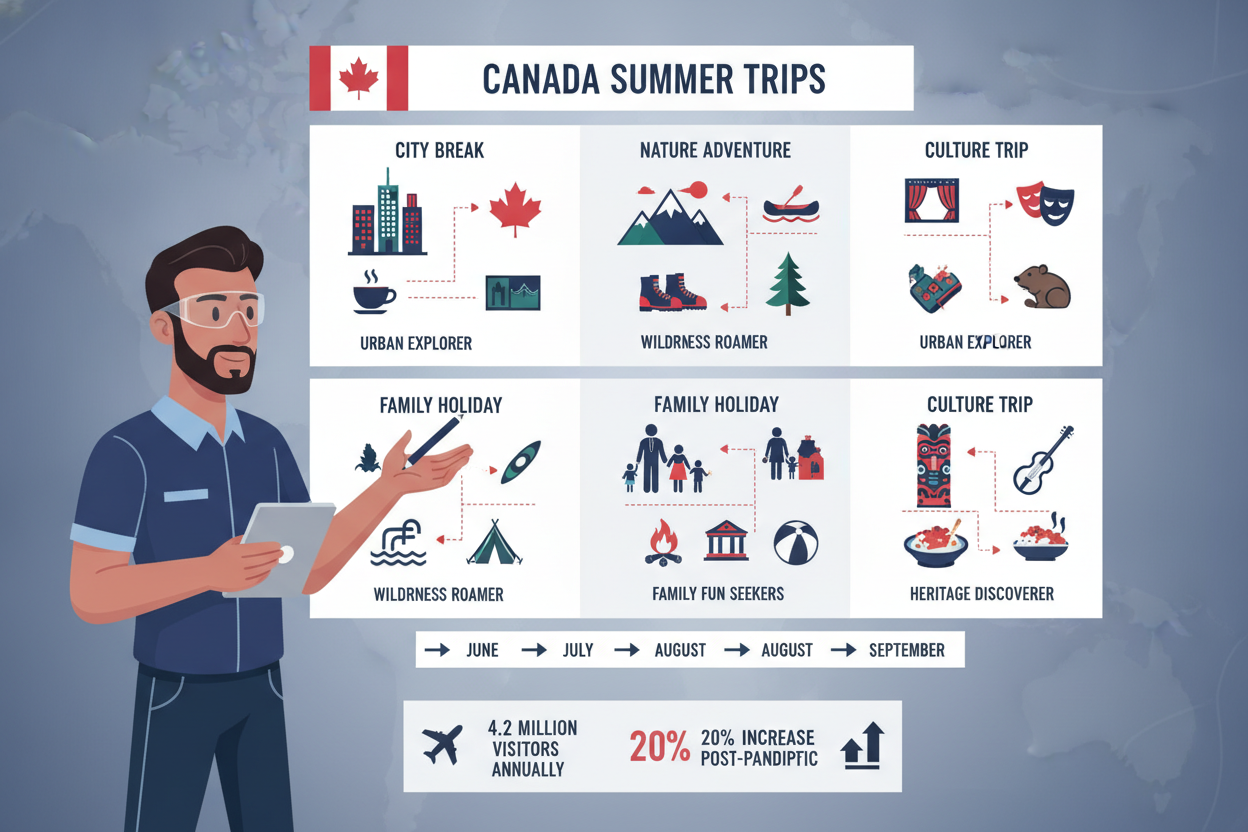
Here are the most common summer travel styles that work well in Canada:- City-and-scenery combo: Ideal for first-time visitors who want attractions plus easy day trips
- Nature-first adventure: Better for hikers, photographers, and travelers comfortable with driving longer distances
- Family holiday: Works best when centered on one city or one scenic region with short transfers
- Festival and food trip: Great for travelers who prefer culture, nightlife, and walkable neighborhoods
- Visiting friends and relatives: Often easiest to build around one arrival city with light sightseeing add-ons
A quick self-selection framework
Use this checklist to narrow your options:- If you have 7 days or less, choose one city-region only
- If you want iconic scenery, prioritize the Rockies or coastal British Columbia
- If you want urban variety, choose Toronto or Montreal as your base
- If you are traveling with children or older relatives, reduce hotel changes
- If this is your first Canada trip, pick places with simple logistics over ambitious domestic hops
Three sample trip identities
1. The classic first-timer
A practical route might be Toronto plus Niagara Falls, with optional day trips and a city-heavy itinerary. This works well for visitors who want recognizable attractions and easier planning.2. The postcard Canada traveler
Vancouver plus Banff or the broader Rockies is the classic scenic choice. It offers the mountains, lakes, and outdoor look many people associate with a dream Canada summer.3. The culture-first traveler
Montreal, Quebec City, or Toronto neighborhoods can anchor a trip centered on festivals, food, architecture, and local character rather than long-distance sightseeing.The takeaway: build your trip around one identity, not five competing ones.
The best places to visit in Canada in summer 2026
Canada is full of worthy destinations, but only a handful consistently work well for most international summer travelers. The right choice depends less on hype and more on whether the destination fits your available time.Vancouver and coastal British Columbia
Vancouver is one of the easiest cities to recommend because it offers a lot with relatively little effort. Stanley Park, Granville Island, beaches, mountain viewpoints, and nearby day trips make it suitable for couples, families, and solo travelers.Why it works:
- Strong mix of city comfort and outdoor access
- Mild summer feel compared with some hotter cities
- Good launch point for Whistler or broader British Columbia travel
Toronto and Niagara Falls
Toronto is often underestimated as a summer destination. It has neighborhoods with distinct food scenes, major attractions like the CN Tower, harborfront spaces, museums, sports, and quick access to the Toronto Islands. Niagara Falls remains a high-impact add-on, especially for travelers who want a famous landmark without complicated planning.Why it works:
- Easy structure for a 4-7 day trip
- Good fit for family travel and urban sightseeing
- Convenient combination of city and day-trip options
Montreal and Quebec flavor
Montreal offers a summer atmosphere that feels different from the rest of North America: cafés, public events, architecture, and a strong food culture. It is one of the best choices for travelers who care more about city character than collecting natural landmarks.Why it works:
- Walkable areas and strong summer energy
- Excellent food and festival appeal
- Distinct identity compared with typical city-break destinations
Banff, Jasper, and the Rockies
For scenery, the Rockies are difficult to beat. Lakes, mountain drives, wildlife viewing, and hiking make this region one of Canada’s biggest summer draws. But it rewards travelers who plan accommodation, transport, and park logistics early.Why it works:
- Iconic landscapes and high visual payoff
- Great for road trips and outdoor itineraries
- Strong fit for travelers prioritizing nature over nightlife
How to budget, book, and time your Canada summer trip well
A better Canada holiday is often a better-timed one. You do not need the cheapest trip possible; you need the trip where flights, accommodation, route, and paperwork all fit together with minimal friction.A realistic budget structure
Most travelers underestimate three costs: internal transport, peak-season accommodation, and activity extras. Instead of planning only around flights, use a simple budget split:- Flights to Canada
- Accommodation
- Intercity transport or car rental
- Daily food and local transit
- Attraction and activity costs
- Insurance and document fees
- Buffer for price changes or unexpected purchases
Booking order that reduces risk
Follow this sequence:1. Confirm entry requirements
2. Set your route and trip length
3. Price flights across a few date windows
4. Reserve core accommodation in your main destinations
5. Add rail, car rental, or domestic flights only after the route is fixed
6. Book timed attractions where needed
7. Finalize insurance and document copies
This order matters because many travelers reverse it. They buy a tempting flight, then realize the accommodation or domestic transfer costs make the trip much less practical.
Timing tips that actually help

- Travel earlier or later within the summer window if your dates are flexible
- Keep weekends in mind for major city pricing spikes
- Stay longer in fewer places rather than changing hotels every 1-2 nights
- If you want national park accommodation or popular scenic routes, start planning well in advance
Documents, entry planning, and using LiveMigrate for eTA support
A Canada summer trip starts before the airport. For many travelers, the most important planning step is understanding whether they need a visitor visa, an Electronic Travel Authorization (eTA), or neither for the specific mode of travel they are using.Start with document clarity
Do not assume your friend’s experience matches yours. Entry requirements vary by nationality and travel circumstances. Some travelers may need a visa, while others flying to Canada may be eligible for an eTA. If you are visiting family, attending a short event, or taking a holiday before studies or work begin, your travel purpose can affect how carefully you should prepare supporting information.Practical checklist:
- Check your passport validity well before booking
- Confirm whether you need a visitor visa or eTA
- Make sure your biographic details match exactly across bookings and applications
- Keep copies of accommodation, return or onward travel, and key itinerary notes
- Prepare basic evidence showing the purpose of your trip if relevant
Why early eTA handling still matters
Even when a travel authorization process is simpler than a full visa application, delays can still disrupt plans if travelers leave everything to the last minute. If you are eligible for an eTA, it is still smart to handle it early enough to correct mistakes, update information if needed, and track progress calmly.LiveMigrate can help travelers who want a faster, more organized way to manage Canada eTA application processing and tracking. Using a platform such as LiveMigrate can be useful if you want a clearer workflow, fewer form errors, and one place to follow your application status while you continue planning flights and accommodation.
What to keep with you when traveling
Even with approved documents, keep your planning materials accessible:- Passport
- Travel authorization details, if applicable
- Flight itinerary
- Hotel or host contact details
- Travel insurance information
- Return or onward travel confirmation
- Key emergency contacts
What most travelers get wrong about a “perfect” Canada summer
The most expensive mistakes in Canada travel are often not dramatic. They come from assumptions that sound reasonable: “We can cover multiple provinces in one week,” “Summer means the weather will be consistently hot,” or “We’ll figure out transport after we land.” This is where a more nuanced view helps.Mistake 1: Trying to cover too much ground
Canada rewards depth more than breadth. A rushed itinerary with three flights, four hotels, and two long transfer days can look impressive on paper but feel tiring in reality. The larger the country, the more each travel day matters.A better move is to choose one region and enjoy it properly. For example:
- Toronto + Niagara + one extra Ontario day trip
- Vancouver + Whistler or Vancouver Island
- Montreal + Quebec City
- Calgary + Banff + Jasper corridor
Mistake 2: Packing for one weather scenario
Summer is not one uniform climate. A city afternoon can be warm, while a mountain evening may feel cool. Rain can interrupt coastal plans, and lake or high-altitude conditions can shift quickly.Pack in layers:
- Light breathable day clothing
- A warm extra layer for evenings
- A waterproof outer layer
- Comfortable walking shoes
- Sun protection
Mistake 3: Assuming all scenic travel is simple
Some of the most beautiful routes in Canada are also the ones that require the most planning. Accommodation near top nature destinations can fill up, driving times can be longer than expected, and “quick detours” may turn into full-day commitments.The contrarian takeaway is simple: the best Canada vacation is often the one with fewer destinations, not more.
Your step-by-step action plan for a smoother 2026 trip
A strong plan removes last-minute panic and helps you enjoy the trip you are paying for. If you want a practical roadmap, use the sequence below.8-step planning checklist
1. Choose your trip style: city, nature, family, culture, or mixed 2. Pick one primary region instead of trying to cover all of Canada 3. Confirm whether you need a visitor visa or an eTA 4. Set a realistic total budget, including a contingency buffer 5. Book flights and main accommodation early enough for your comfort level 6. Add transport, attraction reservations, and insurance 7. Build a weather-smart packing list 8. Save digital and printed copies of key travel documentsSample 7-day itinerary frameworks
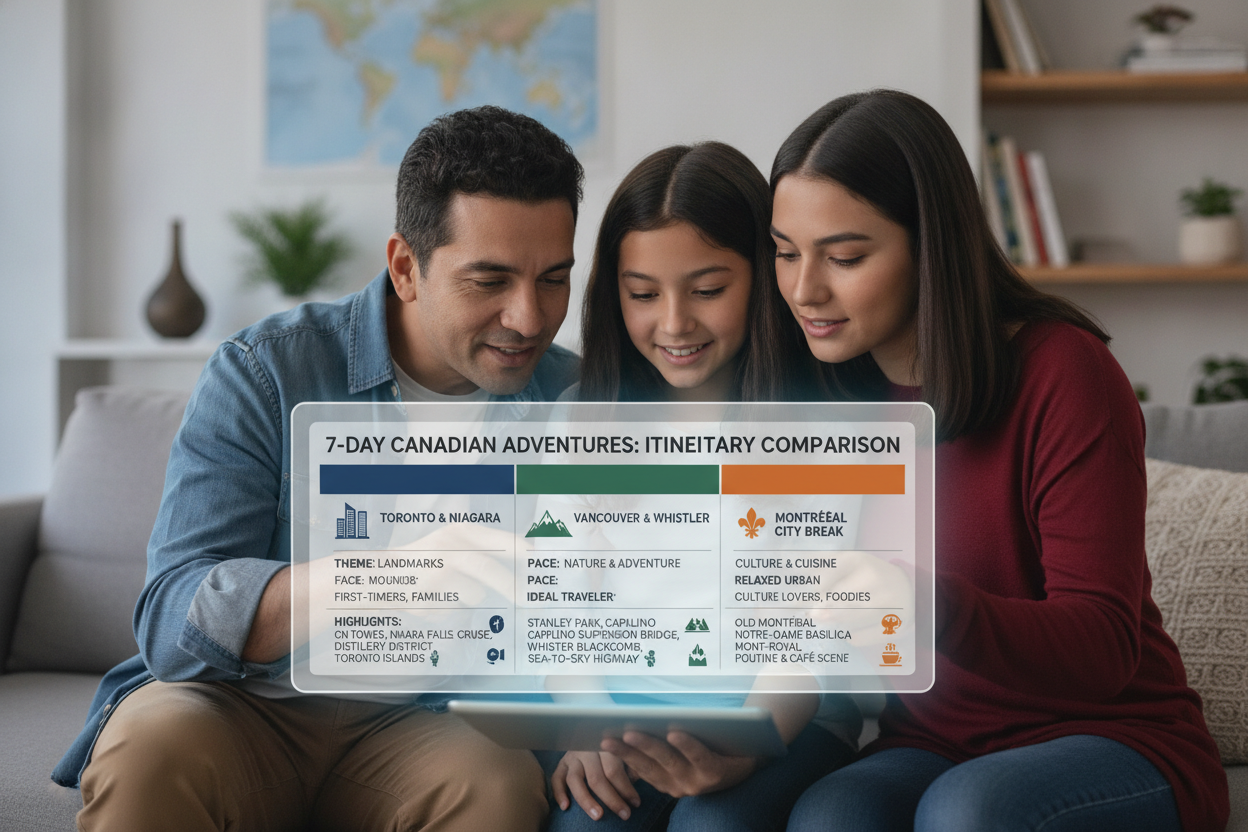
Option A: Toronto and Niagara Falls
- Day 1-3: Toronto neighborhoods, CN Tower, harborfront, museums
- Day 4: Toronto Islands or a flexible city day
- Day 5: Niagara Falls day trip or overnight stay
- Day 6-7: Food, shopping, sports, or family visits
Option B: Vancouver and Whistler
- Day 1-3: Stanley Park, Granville Island, local viewpoints, beaches
- Day 4: Day trip or transition to Whistler
- Day 5-6: Scenic activities and mountain time
- Day 7: Return and departure prep
Option C: Montreal-focused city break
- Day 1-2: Old Montreal and neighborhood exploration
- Day 3-4: Food, museums, festivals, and café time
- Day 5: Day trip or slower local discovery
- Day 6-7: Flexible city experiences before departure
Last pre-departure check
Use this quick final review 72 hours before travel:- Passport valid and accessible
- Authorization or visa details confirmed
- Airline baggage rules checked
- Hotel first-night details saved offline
- Airport transfer plan ready
- Insurance information downloaded
- Weather checked for all destinations
FAQ: common questions about a summer vacation to Canada in 2026
Do I need a visa or an eTA to visit Canada in summer 2026?
It depends on your nationality, passport, and how you are traveling. Some travelers may need a visitor visa, while others flying to Canada may be eligible for an eTA. Check your requirements early and make sure your details match your passport exactly.When should I start planning a Canada summer trip?
For popular summer travel periods, earlier is usually better, especially if you want well-located accommodation, scenic destinations, or family-friendly options with limited availability.Which Canada destination is best for first-time visitors?
Toronto with Niagara Falls, Vancouver, and Montreal are all strong first-trip options. The best choice depends on whether you want city attractions, nature access, or culture and food.Is Banff worth it for a short trip?
Yes, if mountain scenery is your priority and you are comfortable with a more logistics-focused itinerary. No, if you prefer a simple, low-transfer city break.What is the biggest planning mistake to avoid?
Trying to fit too many regions into one trip. Canada is large, and a tighter itinerary usually delivers a better experience.Conclusion: make your 2026 Canada summer trip easier from day one
A memorable summer vacation to Canada in 2026 is less about chasing every famous destination and more about choosing the right version of Canada for you. If you want cities, Canada delivers. If you want lakes, mountains, festivals, family time, or a scenic first international trip, it can deliver that too. But the strongest trips are built on good timing, realistic routing, and clean document preparation.Start with one region, one clear travel style, and one workable budget. Book the essentials before peak demand narrows your choices. Confirm your entry requirements early, especially if you may need a visa or eTA. And if you are eligible for an eTA and want a faster, more organized application and tracking experience, use LiveMigrate to keep the process simple while you plan the fun part.
Your perfect Canada summer vacation does not need to be complicated. It needs to be intentional. Pick your route, sort your documents, and start building a trip you will actually enjoy.
Canada eTA
Ready to travel to Canada?
Apply for your Canada Electronic Travel Authorization online. Quick, guided, and approved in minutes.
Browse by topic