
UK Entry Rules Changed: Who Now Needs an ETA and How to Prepare
A UK trip that used to be as simple as booking a flight may now require a UK ETA before you board. Here’s who should check, what the new rule means, and how to prepare without last-minute stress.
 Shadrach Oloyede17 min read
The trip looks routine until check-in says otherwise
You book a London flight the way you always have. Passport valid? Good. Hotel booked? Done. Meetings, theatre tickets, family plans, or a campus visit all lined up? Perfect. Then, a day or two before departure, someone asks a question you were not expecting: Do you already have your UK ETA?
That moment is exactly why this change matters. For many travelers from places long used to relatively simple UK visits, the old habit was straightforward: buy the ticket, carry your passport, answer questions on arrival if needed. That habit is now risky. Some travelers who previously did not need to apply for anything before a short UK trip may now need an Electronic Travel Authorization, or UK ETA, before boarding.
The practical problem is not usually complexity. It is surprise. Business travelers book fast. Families assume everyone in the group is covered by the same rules. Students focus on school emails and forget border rules are a separate task. Frequent visitors rely on memory because the route has always felt familiar. That is how a small digital requirement turns into expensive stress.
This guide is here to replace guesswork with a simple plan. We will cover what changed, who should pay attention, how the UK ETA works in plain English, what to prepare before applying, and the mistakes most likely to derail an otherwise easy trip.
Key fact: The biggest risk is not that the UK ETA is hard. It is that many eligible travelers do not realize they need to check at all.
If your next UK trip still feels “passport only” in your mind, this is the moment to update that assumption.
What the UK ETA is, in plain English
A UK ETA is a digital pre-travel authorization for certain travelers going to the United Kingdom. It sits in the middle ground between fully visa-free travel and a traditional visa application. In other words: for some people, the UK has added a permission step before travel, even if they still do not need a full visa for a short visit.
That distinction matters because many travelers misread the change in one of two ways. Some panic and assume every short UK trip now requires a visa. Others wave it off because they hear “not a visa” and assume it is optional. Neither reaction is useful. The better view is simpler: if your passport nationality falls under the new requirement, the UK ETA becomes part of your travel checklist.
What changed in practical terms
The shift is less about your reason for travel changing and more about when compliance happens. Instead of everything being sorted only at the UK border, part of the screening happens earlier, before you depart. That means the issue can show up at airline check-in, not just after landing.
For travelers, that changes behavior in a very specific way. You can no longer rely on past smooth trips as proof that your next one will work the same way. Entry rules evolve; your habits may not.
What the UK ETA does and does not do
| Topic | What it means | What it does not mean |
|---|---|---|
| UK ETA | A pre-travel digital authorization linked to your passport | A full visa or permission for every type of activity |
| Passport-only travel | Travel without an extra pre-clearance step | A permanent entitlement that never changes |
| Short visitor travel | Travel for limited, qualifying purposes | Automatic permission to work or study long-term |
A better mental model
Think of the UK ETA as a boarding-stage compliance step for eligible passport holders. It helps determine whether you can travel to the UK under that route. It does not replace the need to use the correct passport, state an accurate trip purpose, or fit the rules for short-term visits.
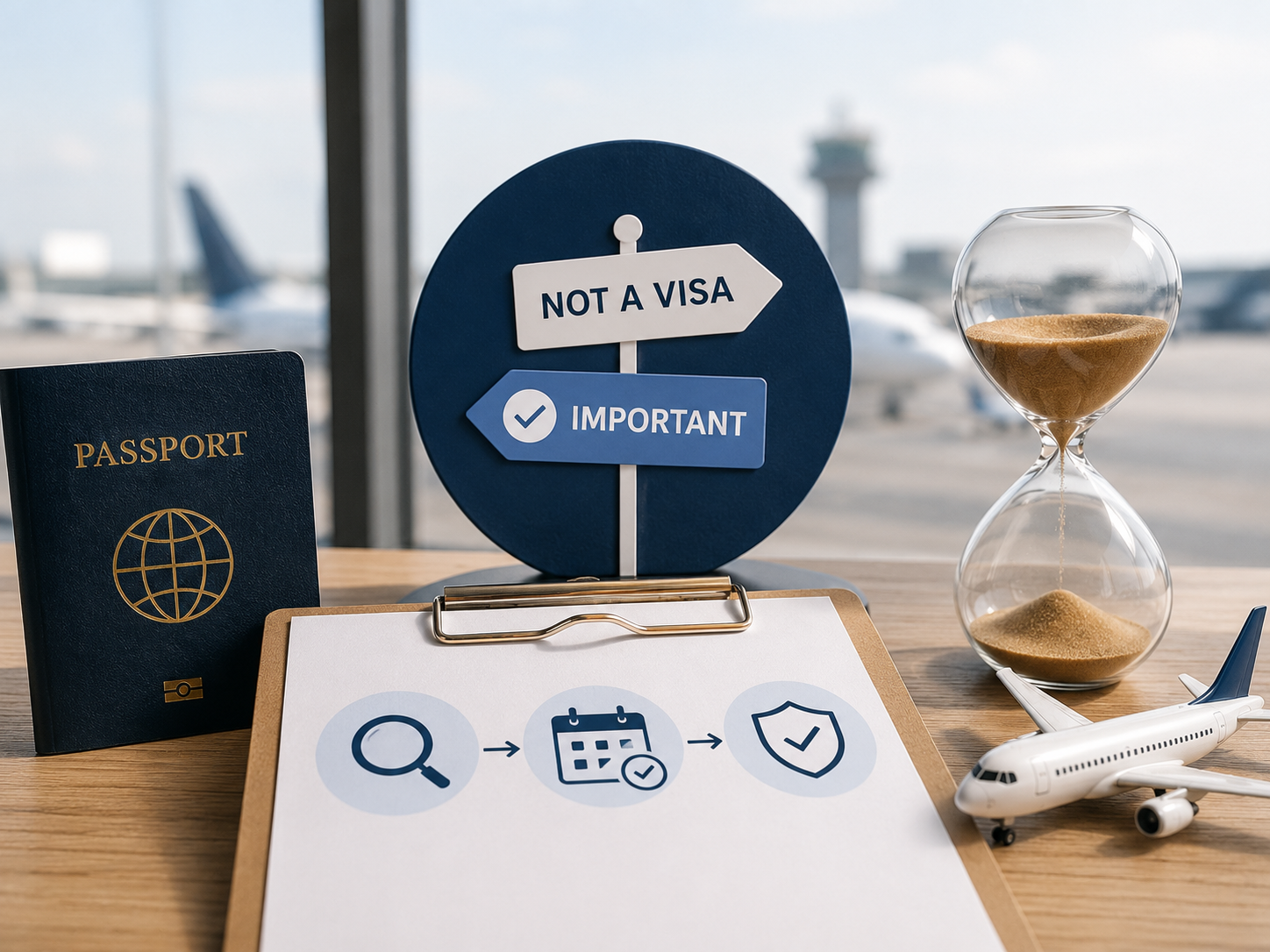
Takeaway: “Not a visa” does not mean “not important.” It means you should understand the step clearly and handle it early.
Once that clicks, the next question becomes the only one that really matters: does this apply to your passport?
Does this apply to you? The travellers most likely to be affected
The people most likely to miss the UK ETA are not careless travellers. They are confident ones. They have flown to the UK before, often many times, and the route feels too familiar to re-check. That is especially true for travellers from visa-exempt countries such as the US, Canada, Australia, and Gulf states, as well as for families and dual nationals whose passport situations are not identical.
Because no source links were provided for a country-by-country list here, the safest guidance is not to publish a definitive nationality roster from memory. Instead, use this practical test: the rule is based on the passport you will actually travel with. If your past UK travel was easy, that does not confirm your next trip is still passport-only.
Groups that should check carefully
You should pause and verify current UK entry requirements if you are any of the following:
- A tourist from a country that has historically enjoyed easy short UK access
- A business traveller flying in for meetings, events, negotiations, or site visits
- A family visitor seeing relatives for a short stay
- A student attending a short programme, university visit, summer course, or academic event
- A dual national choosing between two passports
- A traveller with a renewed, replacement, or newly issued passport
- A parent booking for children who may hold different nationalities
Why experienced travellers are more exposed
People who travel often optimise for speed. They reuse old templates, and trust routine. That works well until a destination introduces a new digital permission layer. Then your strength becomes your blind spot.
A two-day work trip can be affected just as easily as a family holiday. So can a short academic visit that feels too minor to trigger serious planning. The common factor is not the type of trip. It is the assumption that the old process still applies.
A quick self-check
Ask yourself these three questions before you book:
- Which passport will I physically present for this UK trip?
- Have I checked whether that specific passport now requires a UK ETA?
- Has anything changed since my last trip, including passport renewal or nationality mix within the group?
If you are unsure whether the rule affects you, the next section explains the application process and what you need before you start.
How to apply for a UK ETA and what to have ready
The good news is that the UK ETA is designed to be simpler than a traditional visa process. The bad news is that travelers often turn a simple process into a stressful one by leaving it too late, using the wrong passport details, or assuming they can sort it out at the airport. The smarter approach is to handle it as soon as your trip becomes real.
What to prepare before you start
In most cases, you will want these basics ready:
- The passport you will use for travel
- Your passport details entered carefully and exactly
- A working email address and phone number
- A payment method for the application fee
- A basic understanding of why you are travelling
A simple step-by-step process
1. Decide which passport you will travel with. Do this first, especially if you are a dual national.
2. Check whether that passport needs a UK ETA. Do not rely on what happened last year.
3. Complete the application using the same passport details you will travel with. Match names, numbers, and dates exactly.
4. Pay the required fee and submit. Keep confirmation details somewhere easy to find.
5. Wait for the decision and avoid changing passports mid-process. If your passport changes, re-apply for a new UK ETA.
6. Do a final review before departure. Make sure your booking details, passport, and ETA status all align.
How long does it take
The application itself takes minutes on LiveMigrate. Approval from the UK government varies, so don't cut it close, apply well before your trip and give yourself room in case processing runs longer than expected.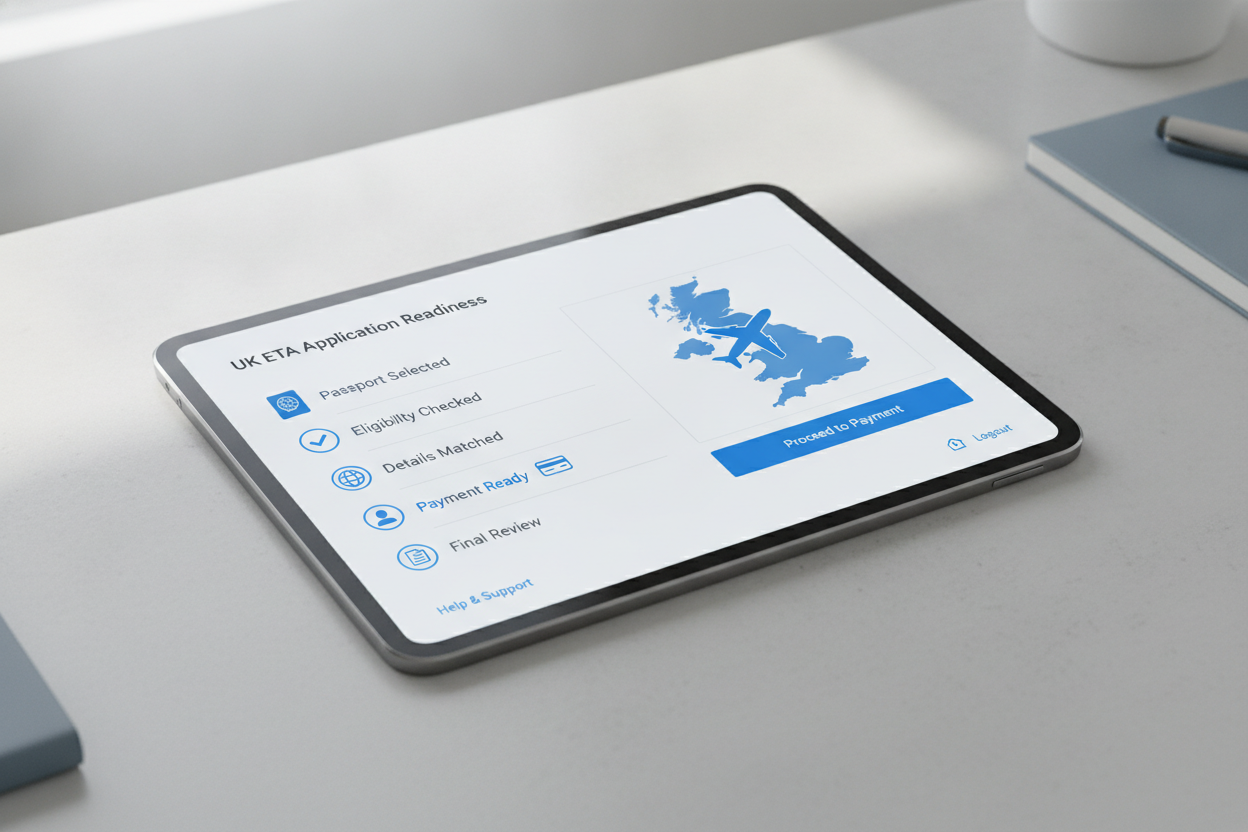
One table worth saving
| Step | What to do | Why it matters |
|---|---|---|
| Passport choice | Pick the exact passport for travel | The UK ETA is linked to that document |
| Requirement check | Confirm whether the passport needs an ETA | This is where repeat travelers slip up |
| Application | Enter details carefully | Tiny mistakes can cause major disruption |
| Timing | Apply before the trip becomes urgent | Last-minute fixes are the most expensive |
| Final review | Re-check before departure | Plans and documents can change |
Takeaway: The easiest UK ETA application is the one you complete early, with one passport and zero guesswork.
Now that the process is clearer, the next issue is just as important: knowing what the UK ETA does not cover.
The part many travelers misunderstand: ETA is not the same as a visa
This is where confusion causes avoidable mistakes. The UK ETA is a travel authorization, not a blank cheque. It helps eligible travelers board for a qualifying short trip. It does not automatically answer every immigration question about what you can do after arrival.
That distinction matters for business visitors, short-course students, visiting academics, founders, consultants, and anyone whose trip includes more than simple tourism. A person can be fully organized on the ETA side and still be careless about whether their activities fit a visitor route.
What the UK ETA generally helps with
In practical terms, a UK ETA usually functions as:
- A digital permission requested before travel
- A requirement tied to a specific passport
- A screening step that may be checked before boarding
- A route used by certain short-term travelers who do not need a full visa
What it does not automatically give you
A UK ETA does not mean:
- You can do any kind of paid work in the UK
- You can study long-term without the correct status
- You can ignore the stated purpose of your trip
- Entry is guaranteed in every circumstance
- You can swap to a different passport without consequences
Why trip purpose still matters
“Just meetings” sounds simple, but details matter. The same goes for a short academic programme, training event, or campus visit. The ETA addresses pre-travel authorization. It does not replace the need to understand whether your planned activities fit the travel route you are using.
That does not mean you need to become an immigration expert. It means you should describe your trip clearly and honestly, then make sure your documents and purpose tell the same story.
Takeaway: The UK ETA solves one specific problem: pre-travel permission. It does not remove the need for compliance checks about your actual visit.
The best way to avoid trouble is not more paperwork. It is better alignment, which is where practical preparation comes in.
How to build a low-stress UK travel routine around the new rule
Most travelers do not want a complex compliance system. They need a repeatable routine that catches the few things most likely to go wrong. That's what LiveMigrate is built for. Check what your trip actually needs, save your details for next time, and travel without the last-minute scramble. If UK travel is part of your work, family life, or study plans, treat the UK ETA as one standard checkpoint in the trip-planning sequence.
The trick is to shift the check from “just before departure” to “as soon as we start planning.” That one habit change removes a surprising amount of stress.
A clean five-step routine
Use this workflow every time a UK trip comes up:
1. Choose the passport first. Not after booking.
2. Check whether a UK ETA is required for that passport. Do this before paying for anything expensive.
3. Confirm your trip purpose in plain language. Tourism, family visit, conference, client meeting, short academic visit.
4. Complete any required travel authorization early. Avoid same-week panic.
5. Re-check everything if plans change. New passport, changed itinerary, added traveler, different nationality.
For families, students, and teams
Delegated travel creates most avoidable errors. A parent assumes one child’s rules match another’s. An executive assumes a travel assistant checked. A student assumes the university’s invitation email covers entry permission. None of those assumptions are safe.
Create one shared rule: entry requirements must be checked for each individual traveler and passport. That one sentence solves many problems before they start. LiveMigrate makes that check fast, run it for every traveler in your group before you book.
A practical pre-booking checklist
- Which passport is being used?
- Is that passport still valid and the one you intend to carry?
- Does that passport require a UK ETA?
- Is the trip purpose clear and supportable?
- Has anyone in the group renewed or replaced a passport since the last trip?
That sounds simple because it is. The harder part is avoiding the subtle mistakes people still make even after they know the rule exists.
What most people still get wrong about the UK ETA
Here is the contrarian truth: the UK ETA is not dangerous because it is complicated. It is dangerous because it looks simple enough to ignore. Travelers hear “electronic authorization,” assume it is a minor formality, and stop paying attention to the second-order details that actually cause disruption.
That is why the most common problems are not dramatic legal misunderstandings. They are administrative habits carried over from the old passport-only era.
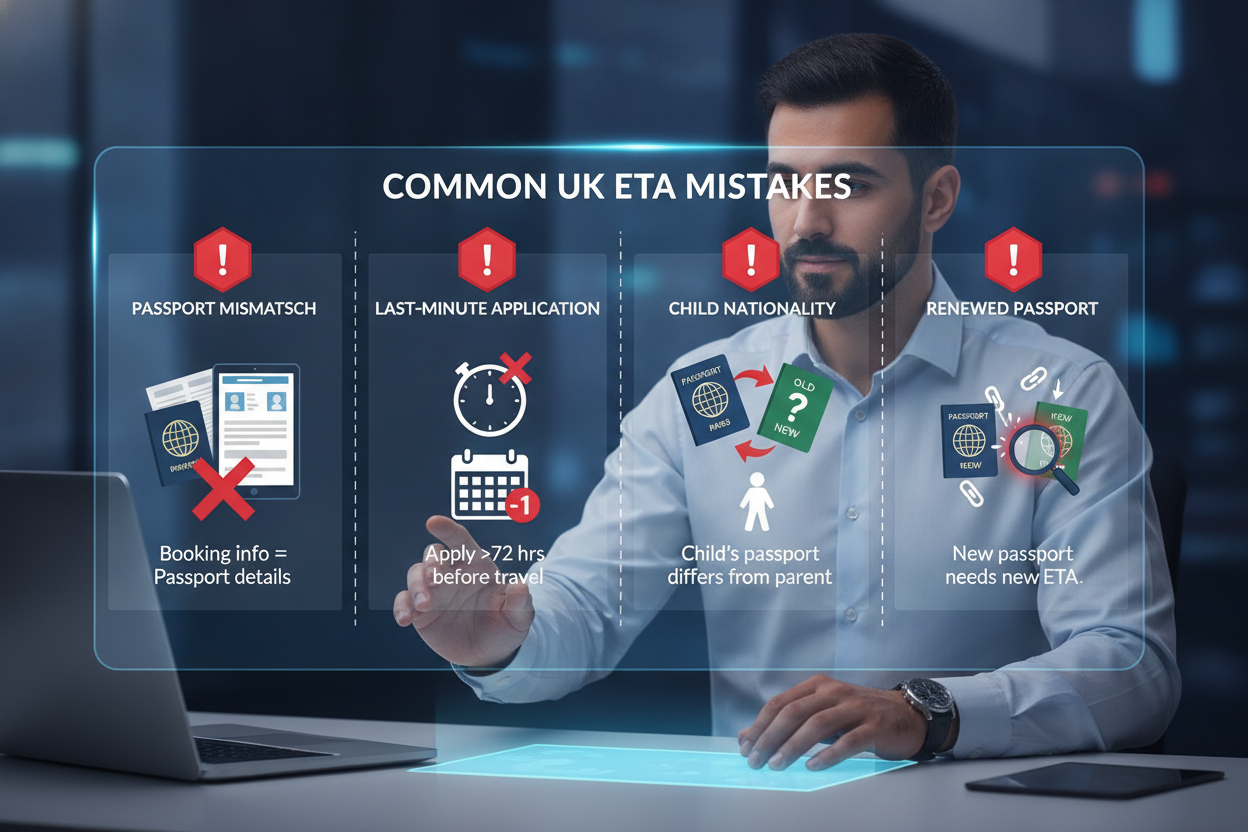
Common mistakes that create real friction
- Applying too late because the trip “should be easy”
- Using one passport for booking and another for travel
- Assuming a new passport carries over old permissions automatically
- Believing business travel is exempt because it is short
- Confusing a school invitation or conference registration with entry permission
- Assuming one family application or one person’s status covers everyone
Where human judgment still matters
LiveMigrate handles the compliance layer — what you need, for which passport, for which route. But there are situations where no digital tool replaces a careful human decision.
That is why a brief human review is still worth doing, especially for:
- Dual nationals
- Mixed-nationality families
- Corporate teams booked by assistants
- Students combining tourism with short academic activity
- Travelers whose passport changed after booking
The balanced mindset to adopt
Do not panic. But do not trivialize the requirement either. The best approach is calm caution: verify the need, use the correct passport, apply early, and keep your purpose clear.
Takeaway: Complacency is a bigger threat than complexity.
With that risk lens in place, the next section turns everything into practical actions you can actually use.
Practical action plans for travelers, families, students, and employers
If you save one section from this guide, save this one. The goal is to make the UK ETA feel less like a breaking-news rule and more like a standard travel task. Once it becomes routine, it stops disrupting trips.
For individual travelers
Use this mini-checklist before every UK booking:
- Confirm the passport you will carry
- Check whether that passport needs a UK ETA
- Make sure your reason for travel is straightforward
- Apply early rather than close to departure
- Re-check if your passport changes
For families
Family bookings fail when one person assumes everyone is covered by the same rules. Review each traveler one by one.
Family checklist:
- Check each person’s passport nationality separately
- Confirm names and passport numbers match bookings exactly
- Review children’s documents independently of the adults
- Keep all confirmations in one accessible folder
For students and short academic visitors
Academic travel creates a specific type of confusion because people mix up admission or invitation paperwork with border permission.
Student checklist:
- Treat school documents and entry documents as separate tasks
- Keep your trip purpose specific and easy to explain
- Re-check your status if the visit expands beyond a simple short stay
- Make sure the passport used for travel is the one used in any application
For employers and travel coordinators
Businesses lose money on preventable travel mistakes. One missed ETA check can derail a meeting-heavy trip that took weeks to arrange.
Employer checklist:
- Add UK entry verification to travel approval workflows
- Ask travelers to confirm nationality before ticketing
- Flag dual nationals and renewed passports for manual review
- Build a final compliance check into pre-departure planning
One summary table for quick sharing
| Audience | Priority action | Biggest avoidable mistake |
|---|---|---|
| Solo traveler | Check UK ETA need before booking | Assuming old trips prove current eligibility |
| Family | Review each traveler separately | Treating the group as one case |
| Student | Separate school admin from entry rules | Confusing invitation with permission |
| Employer | Build checks into workflow | Leaving responsibility unclear |
Takeaway: Once the UK ETA becomes a checklist item, it stops being a surprise and starts being travel hygiene.
Before we wrap up, here are a few quick answers to the questions readers ask most.
FAQ and conclusion: what to do next before you book
FAQ
Do I need a full UK visa now if I used to travel visa-free?
Not necessarily. For many eligible short-term travelers, the new issue is whether they need a UK ETA, not whether they need a full visa. The answer depends on the passport you will use and the purpose of your trip.
If I visited the UK last year without problems, can I assume I am fine now?
No. Past travel is not proof that current rules are unchanged.
Can I use one passport to book and another to travel?
That is a common source of mistakes. As a rule, keep your booking, application, and travel passport aligned.
Does a UK ETA mean I can do any kind of work in the UK?
No. It is a pre-travel authorization, not permission for all activities.
Should I leave the application until just before I fly?
No. Even if the process seems simple, last-minute applications create unnecessary risk.
Conclusion
The headline is simple: a UK trip that once felt routine may now require a UK ETA before departure. For travelers from historically visa-exempt countries, that matters not because the process is impossible, but because the change is easy to miss.
The smartest response is also the simplest. Decide which passport you will use. Check whether that passport needs a UK ETA. Apply early if required. Make sure your travel purpose is clear. Then re-check if anything changes.
That is the kind of task LiveMigrate is built to make easier. Not by replacing official rules or acting as an application service, but by helping travelers, families, students, and teams track digital travel requirements in a calmer, more organized way. If you are planning a UK trip soon, use LiveMigrate as your planning layer: one place to sense-check the route, the passport, and the paperwork before urgency takes over.
Final takeaway: Five careful minutes before booking can save a cancelled check-in, a missed meeting, or a disrupted family trip later.
Canada eTA
Ready to travel to Canada?
Apply for your Canada Electronic Travel Authorization online. Quick, guided, and approved in minutes.